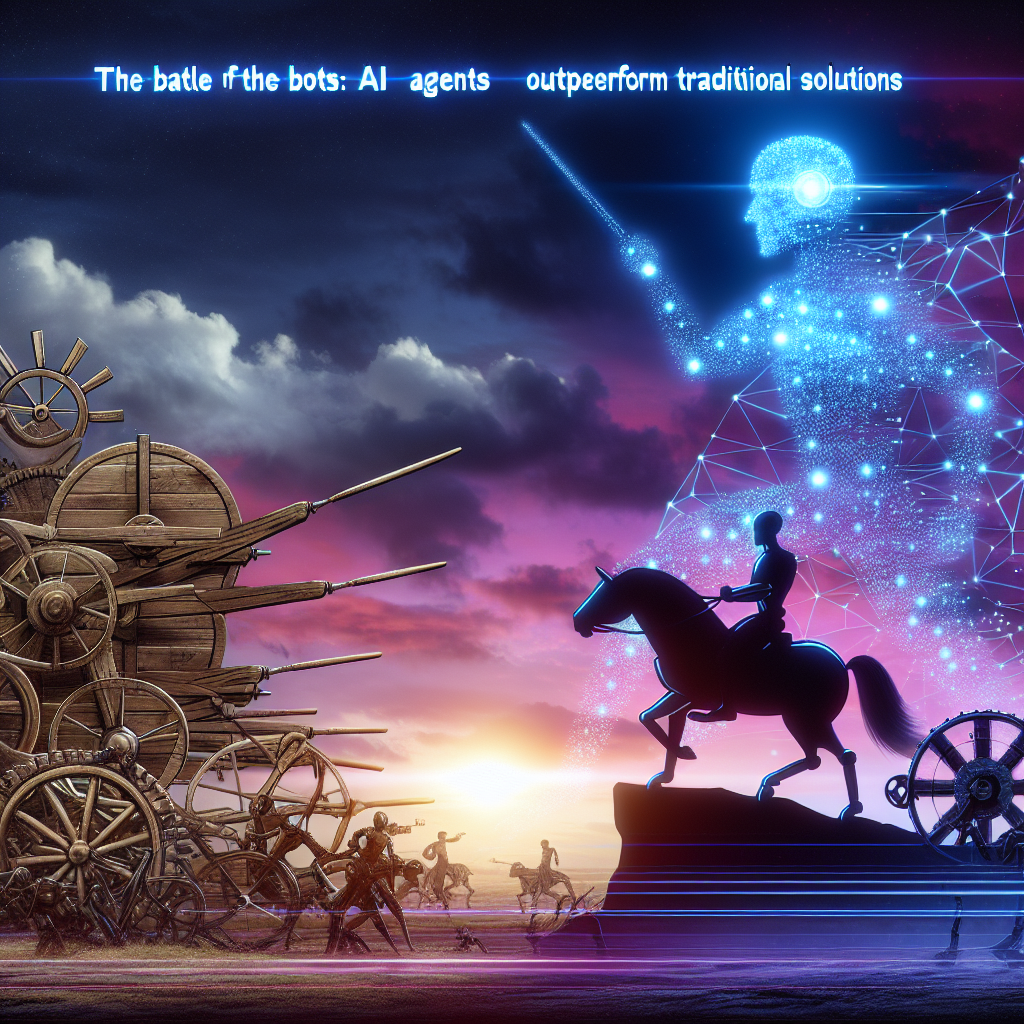
Artificial Intelligence (AI) has become a pivotal force in today’s technological landscape. The emergence of AI agents—or bots—marks a significant shift in how businesses operate and make decisions. This article aims to delve into how AI agents outperform traditional solutions and the implications of this revolution for entrepreneurs, marketers, and small business owners.
Understanding AI Agents
What Are AI Agents?
AI agents are systems that utilize algorithms to perform tasks that typically require human intelligence. These tasks include data analysis, customer service, and even decision-making. Unlike traditional solutions that rely heavily on manual intervention, AI agents can process vast amounts of information at unprecedented speeds.
Types of AI Agents
- Chatbots: These are widely used for customer service and engagement.
- Predictive Analytics Tools: These help businesses anticipate trends and customer behavior.
- Robotic Process Automation (RPA): These bots can automate repetitive tasks, reducing the time and resources involved.
Traditional Solutions vs. AI Agents
Speed and Efficiency
One of the primary advantages of AI agents is their speed. Traditional solutions often involve lengthy processes characterized by human decision-making, which can lead to delays. In contrast, AI agents can analyze data and provide insights exponentially faster, leading to quicker decision-making.
For instance, studies indicate that AI can perform data analysis tasks up to 100 times faster than conventional methods (Forbes).
Scalability
AI solutions are inherently more scalable than traditional ones. As a business grows, the data it generates increases. Traditional solutions may struggle to keep up with the volume, but AI agents thrive in such environments. They can scale operations without a proportional increase in resources, which is vital for businesses looking to grow.
Cost-Effectiveness
While there might be significant initial costs associated with implementing AI, the long-term savings often outweigh these expenses. AI agents can reduce the need for a large workforce and lower operational costs through automation of routine tasks.
Case Studies
The Rise of AI in Customer Service
Consider the retail industry, which has seen a significant transformation through the application of AI agents. Companies like Nordstrom have implemented AI-driven chatbots that can handle customer inquiries, thereby improving response times and enhancing customer satisfaction.
A report from McKinsey highlights that businesses implementing AI in customer service show a 30% increase in customer satisfaction scores.
Predictive Analytics in Marketing
AI agents have revolutionized the marketing sector through predictive analytics. Businesses can analyze consumer behavior patterns in real time and adjust their marketing strategies accordingly. For example, retailers utilizing AI-powered tools have reported an increase in return on advertising spend (ROAS) by up to 50%.
Advantages of Using AI Agents
Enhanced Decision-Making
AI agents provide actionable insights derived from comprehensive data analysis. By leveraging machine learning and predictive analytics, businesses can make informed decisions quickly and effectively.
Personalization
AI agents excel in creating personalized experiences for customers. By analyzing user data, these agents can tailor recommendations, improving customer engagement and satisfaction.
Continuous Learning and Adaptability
AI agents learn from new data, making them increasingly effective over time. This adaptability allows them to improve their performance without the need for constant human oversight.
Challenges in Implementing AI Solutions
While the benefits of AI agents are clear, they do come with challenges that businesses must navigate.
Initial Investment
The cost of implementing AI technology can be daunting for small businesses. However, attracting investment to finance AI solutions can be a feasible solution.
Data Privacy Concerns
As AI agents are often data-driven, businesses must ensure they comply with data protection regulations to avoid breaches and penalties. This includes implementing transparent data usage policies.
Skill Gaps
There is often a gap between the capabilities of existing staff and the skills required to manage AI tools effectively. Investing in training and education is crucial for successful implementation.
The Future of AI Agents in Business
Innovations on the Horizon
The continuous evolution of AI technology promises even greater capabilities for AI agents. Upcoming innovations, such as advanced natural language processing and machine learning algorithms, will expand their role across various industries.
Increased Adoption Across Sectors
As awareness of the benefits of AI grows, more industries beyond retail and marketing are beginning to adopt AI solutions. Sectors such as healthcare, finance, and logistics are starting to leverage AI for improved operational efficiency and customer experiences.
Conclusion
In the battle of the bots, AI agents undoubtedly hold the upper hand over traditional solutions. They provide enhanced speed, efficiency, scalability, and cost-effectiveness, all of which are critical for today’s competitive market landscape.
Entrepreneurs and small business owners must consider the implementation of AI agents not merely as an option but as a necessity to thrive in a digital-first world.
For further insights into how technology is reshaping business strategies, check out our article on The Impact of Digital Transformation on Business.
External Links
This article serves as a comprehensive guide for anyone looking to understand the transformative potential of AI agents over traditional solutions. The benefits are clear, and the future beckons organizations to adapt or risk being left behind.