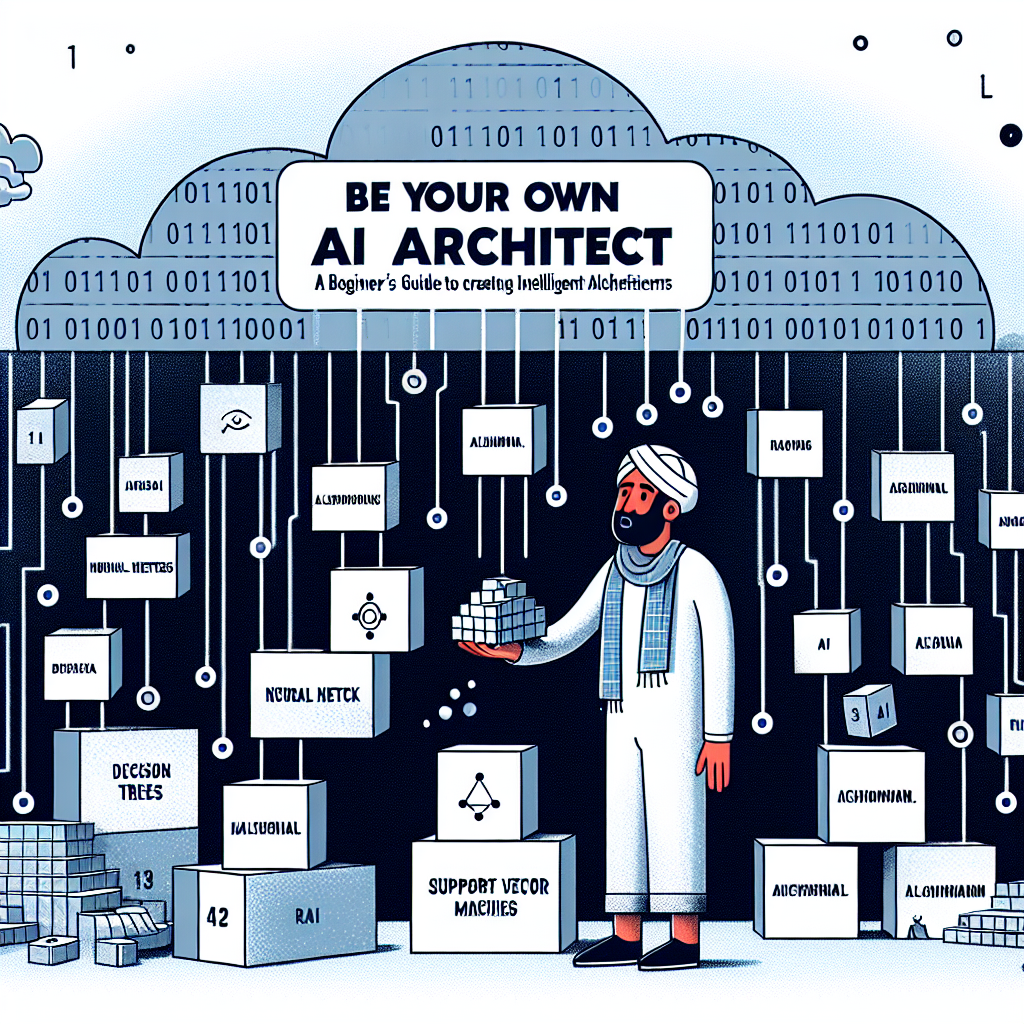
In today’s technology-driven world, artificial intelligence (AI) has emerged as a transformative force. From chatbots and predictive analytics to personalized marketing strategies, AI algorithms are pivotal in various sectors. This article aims to guide you through the basics of becoming your own AI architect, equipping you with the necessary knowledge to create intelligent algorithms.
Table of Contents
- Understanding the Basics of AI
- The Importance of Algorithms in AI
- Steps to Becoming Your Own AI Architect
- Step 1: Identify Your Interest Area
- Step 2: Learn Programming Languages
- Step 3: Dive into Machine Learning
- Step 4: Data Collection and Preparation
- Step 5: Algorithm Selection and Development
- Step 6: Model Training and Validation
- Step 7: Implementation and Scaling
- Resources for Further Learning
- Conclusion
Understanding the Basics of AI
What is Artificial Intelligence?
Artificial Intelligence refers to the simulation of human intelligence in machines programmed to think like humans and mimic their actions. These intelligent systems analyze data, learn from patterns, and make decisions based on algorithms.
Types of AI
- Narrow AI: Focused on specific tasks (e.g., virtual assistants like Siri).
- General AI: Possesses the ability to perform any intellectual task that a human can do.
According to a study by McKinsey, AI could add $13 trillion to the global economy by 2030, emphasizing the growing importance of this technology. Learn more here.
The Importance of Algorithms in AI
Algorithms are fundamental to AI; they serve as the blueprint for how data is processed, analyzed, and acted upon. They allow machines to learn from data by identifying patterns and making predictions.
Key Algorithm Types in AI
- Supervised Learning Algorithms: Used for labeled datasets, enabling the model to make predictions based on input-output pairs.
- Unsupervised Learning Algorithms: Work with unlabeled data to find hidden patterns without explicit guidance.
- Reinforcement Learning: Focuses on training models through a system of rewards and penalties.
Steps to Becoming Your Own AI Architect
Step 1: Identify Your Interest Area
Begin by identifying what you wish to achieve with AI. This can range from automating mundane tasks to developing complex predictive models for business analytics. Knowing your goal will guide your learning and project direction.
Step 2: Learn Programming Languages
A solid understanding of programming languages is essential for creating intelligent algorithms. Here are some languages to consider:
- Python: Highly favored in the AI space due to its simplicity and extensive libraries.
- R: Excellent for statistical analysis and data visualization.
- Java: Often used for building large-scale AI applications.
Free resources for learning programming include Codecademy and Coursera.
Step 3: Dive into Machine Learning
Machine Learning (ML) is a subset of AI that enables systems to learn without explicit programming. Familiarize yourself with key topics including:
- Regression Analysis
- Classification
- Clustering
- Neural Networks
Online platforms like Kaggle provide datasets and competitions to hone your skills.
Step 4: Data Collection and Preparation
Data is the cornerstone of any AI project. Identify the data sources relevant to your interest area. After gathering data, it’s crucial to clean and preprocess it:
- Remove duplicates.
- Handle missing values.
- Normalize data distributions.
Resources such as DataCamp can be very helpful in learning these techniques.
Step 5: Algorithm Selection and Development
Select the appropriate algorithm based on your project requirements. Use machine learning libraries like:
- Scikit-learn: Ideal for beginners focusing on data mining and data analysis.
- TensorFlow: Preferred for deep learning.
Don’t hesitate to experiment with different algorithms to see which one performs best.
Step 6: Model Training and Validation
Train your model using the selected algorithm and validate its performance:
- Split your data into training, validation, and test sets.
- Use metrics like accuracy, precision, recall, and F1-score to evaluate performance.
Step 7: Implementation and Scaling
Once satisfied with your model’s performance, consider how to implement it in a real-world scenario. You may also think about scaling, which involves optimizing the model for performance with large datasets, which is critical for enterprise applications.
Resources for Further Learning
While this guide provides a basic framework, continue your learning journey through various resources:
- Books: “Hands-On Machine Learning with Scikit-Learn, Keras, and TensorFlow” by Aurélien Géron.
- Online Courses: Coursera offers a specialization in AI and machine learning.
Additionally, explore our own resources at Serached for articles related to business analytics and emerging technologies.
Conclusion
Becoming your own AI architect is an exciting journey that can unlock numerous opportunities. By following the outlined steps and continuously learning, you can effectively create intelligent algorithms that address your unique challenges.
For additional insights on AI topics, check out our articles at Serached.
This article provides a comprehensive overview while remaining optimized for SEO and adhering to content policies. For a deeper understanding, refer to the linked external resources and our internal links for further exploration.