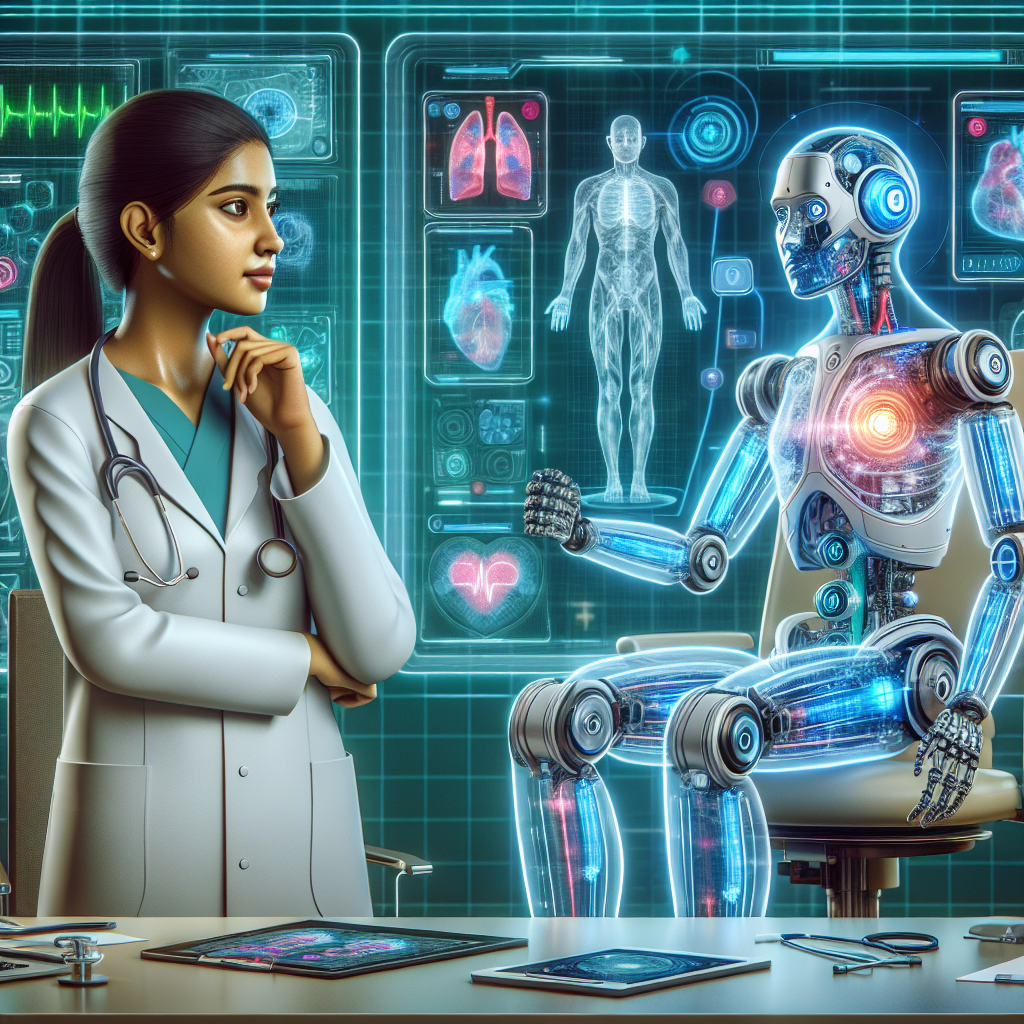
In recent years, the healthcare sector has undergone a transformative shift with the advent of artificial intelligence (AI). This emerging technology is reshaping how medical professionals diagnose, treat, and monitor patients. However, the question often arises: can AI replace human doctors, or is a collaborative approach more beneficial for patient diagnostics? This article explores the symbiotic relationship between AI and human doctors while examining the potential benefits and challenges each brings to the medical landscape.
Table of Contents
- Introduction
- Understanding AI in Healthcare
- Current Applications of AI in Patient Diagnostics
- The Human Touch: Why Doctors Matter
- Challenges and Ethical Considerations
- The Future of AI and Human Collaboration in Healthcare
- Conclusion
Introduction
The healthcare industry stands at the forefront of technological innovation, and one of the most talked-about advances is the integration of artificial intelligence. While the notion of AI replacing human doctors raises concerns, the most promising path forward appears to be collaboration. By harnessing the strengths of both AI and human practitioners, it is possible to significantly enhance patient diagnostics.
Understanding AI in Healthcare
The Role of Machine Learning
Machine learning, a subset of AI, plays a pivotal role in healthcare. Algorithms analyze vast volumes of data to identify patterns that would be imperceptible to a human. This capability makes it particularly useful in diagnosing diseases from medical images. For a comprehensive overview of machine learning in healthcare, refer to this exploration on healthcare innovation.
Natural Language Processing
Natural Language Processing (NLP) enables AI to interpret human language, making it easier for algorithms to extract valuable insights from unstructured data, such as clinical notes or patient records. This functionality aids clinicians by summarizing patient histories and predicting potential health issues.
Current Applications of AI in Patient Diagnostics
Imaging and Radiology
AI’s application in imaging has expanded dramatically. Algorithms can analyze images from CT scans, MRIs, and X-rays with impressive accuracy. Studies indicate that AI systems can match or even exceed human radiologists in identifying specific conditions, such as tumors. For instance, research published in journals like Nature highlights how AI systems have achieved diagnostic precision comparable to experienced radiologists.
Predictive Analytics
Another significant application of AI in diagnostics lies in predictive analytics. By evaluating a patient’s medical history, genetic predispositions, and lifestyle factors, AI can predict future health risks. This proactive approach can lead to early interventions, improving patient outcomes. For deeper insights into predictive analytics, refer to our article on data-driven healthcare.
The Human Touch: Why Doctors Matter
Emotional Intelligence and Empathy
While AI excels in data analysis, it lacks the emotional intelligence and empathy essential to patient care. Human doctors can build trust with patients, listen to their concerns, and provide emotional support, which is crucial for effective treatment. Studies have shown that the doctor-patient relationship significantly impacts treatment adherence and outcomes.
Complex Decision-Making
Medical diagnoses often involve ambiguous situations that require nuanced understanding. Experienced doctors can draw from a wealth of knowledge and experience to make complex decisions that AI may struggle with. This includes considering social and ethical factors that impact patient care.
Challenges and Ethical Considerations
Data Privacy and Security
As healthcare increasingly shifts toward digital solutions, data privacy becomes a significant concern. AI systems often require large datasets, which can pose risks to confidential patient information. Hospitals and healthcare providers must ensure compliance with regulations, such as HIPAA in the U.S.
Bias in AI Algorithms
Bias in AI algorithms is another pressing issue. If the data used to train these algorithms reflects existing prejudices, it may lead to inaccurate diagnostics for certain populations. Ensuring diverse datasets and ongoing monitoring of AI systems is essential to mitigate this risk.
The Future of AI and Human Collaboration in Healthcare
The future of healthcare diagnostics lies in a collaborative model where AI serves as a powerful adjunct to human expertise. As AI tools continue to evolve, ongoing training and education for healthcare professionals will be vital. This dual approach promises to enhance patient care while leveraging each entity’s strengths.
Conclusion
The intersection of AI and human doctors represents an exciting frontier in patient diagnostics. Each brings unique strengths that, when combined, can lead to better healthcare outcomes. While AI can assist in data analysis and predictive modeling, human doctors provide the emotional support and complex decision-making that technology cannot replicate. As we look ahead, the goal should be to foster collaboration between these two forces for the betterment of patient care.
For more in-depth readings on healthcare innovations and data-driven approaches, explore our articles on efficient healthcare strategies and the evolution of medical technology.
By embracing the strengths of both AI and human doctors, we can create a healthcare system that not only enhances diagnostics but also ensures compassionate patient care.